Speech Therapy
Individual Speech Therapy Session
Speech therapy supports children in correctly developing language and communication by addressing pronunciation, fluency, and comprehension. Through adapted methods, the speech therapist transforms exercises into a pleasant learning experience that helps children freely express their ideas and integrate more easily into school and social environments.
Speech therapy is not limited to sound correction but has a major impact on child development. Through therapy, children improve not only speech but also attention, memory, self-confidence, and relational skills. A child who communicates clearly is better understood, feels valued, and can actively participate in group life.
Speech therapy thus has a preventive and educational role, preparing the child for harmonious integration into school and society.
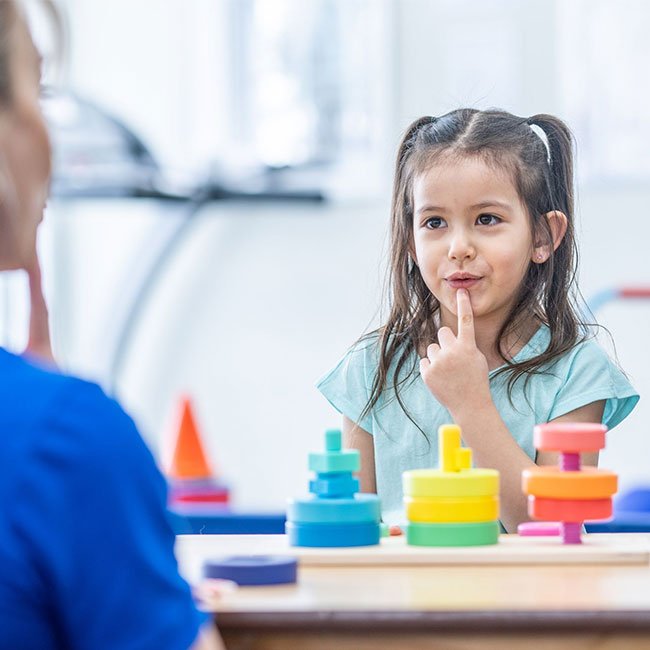
STAGES OF A SPEECH THERAPY SESSION
1. Entering the activity
The session begins with a brief acclimation activity that helps the child naturally enter the working relationship.
2. Therapeutic work through play
Speech exercises are integrated into playful activities adapted to the child's age and interests, making learning natural and motivating.
3. Guided practice
Through games and structured tasks, the child is supported to practice targeted skills with constant feedback and adjustments as needed.
4. Consolidation and generalization
Acquisitions are reinforced through varied activities encouraging the use of skills in different contexts.